
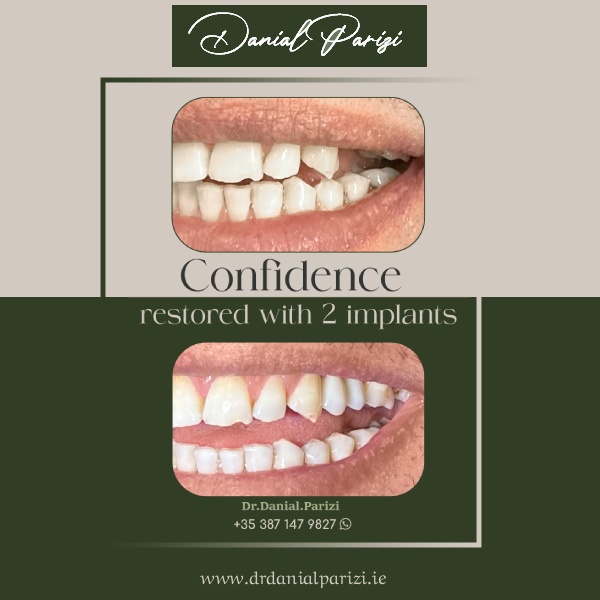
Dental implants are the most advanced and long-lasting solution for replacing missing teeth. They restore chewing function, speech, appearance, and confidence by closely mimicking the structure and function of natural teeth. Unlike removable dentures or traditional bridges, dental implants are fixed securely into the jawbone, offering excellent stability and helping preserve bone and facial structure over time.
What Are Dental Implants?
Dental implants are artificial tooth roots, typically made from medical-grade titanium. They are surgically placed into the jawbone to support a replacement tooth, bridge, or crown. Following placement, the implant integrates with the bone through a biological process called osseointegration, allowing it to function like a natural tooth root and provide a strong, stable foundation.
Parts of a Dental Implant
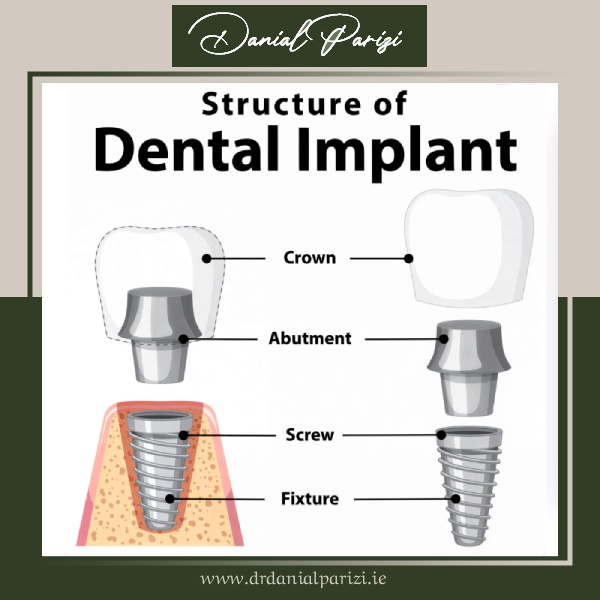
A complete dental implant system consists of three essential components:
- Implant Fixture: A titanium screw placed into the jawbone that replaces the missing tooth root and provides long-term stability.
- Abutment: A connector that sits on top of the implant and emerges through the gum, linking the implant to the visible tooth.
- Dental Crown: A custom-made ceramic or porcelain tooth designed to match the colour, shape, and size of natural teeth.
Together, these components work as one system to restore function and aesthetics.
Why Choose Dental Implants?
When a tooth is lost, the jawbone in that area no longer receives stimulation and gradually shrinks. Dental implants prevent this by transmitting chewing forces to the bone, helping maintain bone volume and oral health.
Key benefits:
- Permanent and secure tooth replacement
- Prevention of jawbone loss
- Natural look and feel
- Improved chewing and speech
- No damage to neighboring teeth
- Excellent long-term success rates
Who Is an Ideal Candidate for Dental Implants?
An ideal candidate for a dental implant typically:
- Has one or more missing teeth
- Has sufficient jawbone or is suitable for bone grafting
- Maintains good oral hygiene
- Does not suffer from uncontrolled systemic disease
- Is a non-smoker or willing to stop smoking during healing
Patients with conditions such as uncontrolled diabetes, advanced gum disease, or immune compromise may still be candidates following careful assessment.
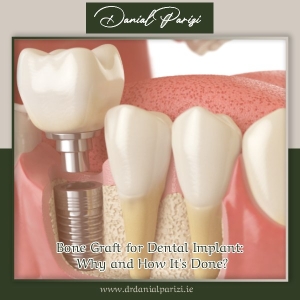
Patients told they “Don’t have enough bone” should seek a second opinion. Modern techniques such as bone grafting, sinus lifts, and short implants have significantly expanded eligibility.
Dental Implant Procedure
Dental implant treatment is a structured, multi-phase process:
1. Assessment & Planning : Clinical examination, digital X-rays, and often a 3D CBCT scan are used to evaluate bone quality and anatomy.
2. Implant Placement : The implant is placed under local anesthetic (with or without sedation). This stage usually involves minimal discomfort.
3. Healing & Osseointegration
The implant integrates with the bone over several months. In some cases, a temporary tooth may be placed.
4. Final Restoration : The abutment and final crown are fitted, completing the restoration.
How Long Does Dental Implant Treatment Take?
The surgical placement of a single implant typically takes 30–60 minutes. However, from consultation to final crown placement, treatment usually takes 3–6 months, or longer if bone grafting is required. This allows proper biological healing and long-term success.
How Long Do Dental Implants Last?
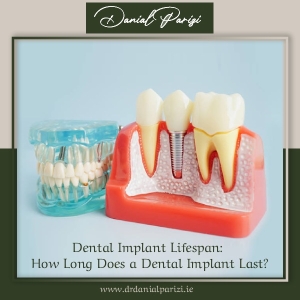
With good oral hygiene and regular dental visits, dental implants can last many years — often decades. They have one of the highest success rates in dentistry.
Book a Dental Implant Consultation
If you are considering dental implants and want a long-term, reliable solution for missing teeth, a personalized consultation is the first step.
- Comprehensive assessment
- 3D implant planning
- Clear explanation of options and costs
Contact us today to book your dental implant consultation.
Dental Implants – Frequently Asked Questions
1. Are dental implants painful?
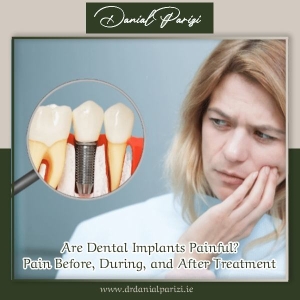
Dental implant surgery is performed under local anesthetic and is usually associated with minimal discomfort. Most patients report that the procedure is less uncomfortable than a tooth extraction. Any post-operative soreness is typically mild and can be managed with standard pain relief.
2. How long do dental implants last?
With good oral hygiene and regular dental check-ups, dental implants can last many years — often decades. They are one of the most reliable and long-lasting treatments in modern dentistry.
3. How long does the dental implant process take?
While placing a single dental implant usually takes 30–60 minutes, the full treatment process — from consultation to final crown — typically takes 3 to 6 months. This allows time for proper bone healing and long-term stability.
4. Can I get dental implants if I don’t have enough bone?
In many cases, yes. Modern techniques such as bone grafting, sinus lift procedures, and short implants often make implant treatment possible even when bone volume is limited. A 3D scan is used to assess suitability accurately.
5. Are dental implants better than dentures or bridges?
Dental implants are fixed, stable, and feel more like natural teeth. Unlike bridges, they do not require trimming healthy neighboring teeth. Unlike dentures, they do not move and help prevent jawbone loss. For most patients, implants offer superior comfort, function, and long-term outcomes.
6. Can smokers get dental implants?
Smoking significantly increases the risk of implant failure due to reduced blood supply and delayed healing. Smokers may still be candidates, but they are strongly advised to stop smoking before and during the healing period to improve success rates.
7. Who is not suitable for dental implants?
Patients with uncontrolled diabetes, active gum disease, or compromised immune systems may not be suitable initially. However, many patients can still proceed after appropriate medical management and careful assessment.
8. Will dental implants look natural?
Yes. Dental implant crowns are custom-made to match the colour, shape, and size of your natural teeth. When planned and restored properly, implants are virtually indistinguishable from natural teeth.
9. How do I care for dental implants?
Dental implants are cared for like natural teeth:
- Daily brushing and flossing
- Regular dental check-ups
- Professional cleaning
Good oral hygiene is essential for long-term success.
10. What is the success rate of dental implants?
Dental implants have a very high success rate, typically above 95% when placed in suitable patients and maintained properly. Careful planning and good aftercare are key factors.