
Dental implants are one of the most reliable and long lasting solutions for replacing missing teeth. They restore both function and appearance, helping patients eat, speak, and smile with confidence. However, the success of a dental implant does not depend solely on the surgical procedure. Proper recovery and aftercare play a crucial role in ensuring long term stability and optimal healing. This comprehensive guide explains what patients can expect during dental implant recovery, how to care for implants after surgery, and the best practices recommended by dental professionals to ensure successful outcomes.
Understanding the Dental Implant Healing Process
A dental implant is a titanium post that is surgically placed into the jawbone to serve as an artificial tooth root. After placement, the implant must integrate with the surrounding bone through a biological process known as osseointegration.
Osseointegration typically takes several weeks to a few months depending on factors such as bone density, overall health, and oral hygiene. During this time, the jawbone gradually fuses with the implant, creating a stable foundation for the final crown, bridge, or denture.
Proper care during the healing period is essential because disturbances, infection, or excessive pressure on the implant can interfere with this process.
What to Expect After Dental Implant Surgery
Immediately after dental implant surgery, patients may experience mild to moderate symptoms. These are normal parts of the healing process and usually subside within a few days.
Common post surgery symptoms include:
- Mild swelling of the gums and face
- Minor bleeding or oozing at the surgical site
- Slight bruising around the gums or skin
- Discomfort or tenderness near the implant area
Most patients can return to normal daily activities within one to two days, although strenuous physical activity should be avoided for several days after the procedure.
Dentists usually prescribe pain relievers or recommend over the counter medications to manage discomfort during the first few days.
The First 24–48 Hours: Critical Healing Period
The first two days after dental implant surgery are particularly important for minimizing complications and supporting initial healing.
Patients should follow these essential guidelines:
- Control Bleeding: Bite gently on the gauze provided by your dentist for about 30 to 60 minutes after surgery. If minor bleeding continues, replace the gauze and apply light pressure.
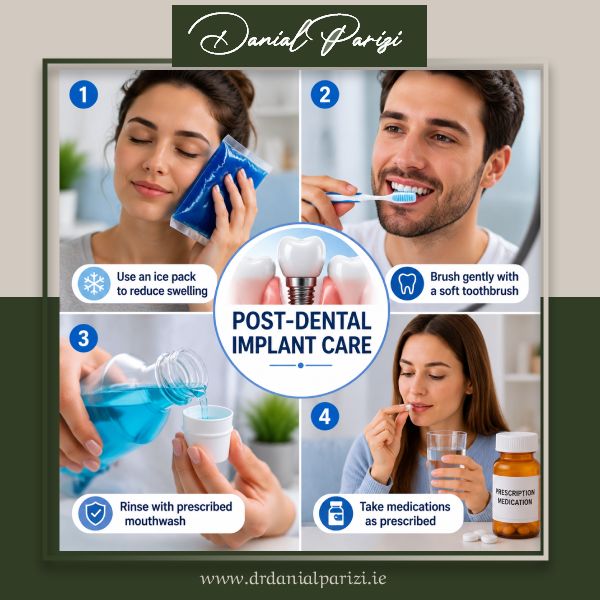
- Reduce Swelling: Applying an ice pack to the outside of the face near the surgical area can help reduce swelling. Use the ice pack for 15 minutes at a time during the first 24 hours.
- Rest and Limit Activity: Resting helps your body begin the healing process. Avoid strenuous exercise, heavy lifting, or intense physical activity for at least 48 hours.
- Avoid Rinsing Vigorously: Do not rinse your mouth aggressively on the first day, as this may disturb the blood clot forming at the implant site.
Diet After Dental Implant Surgery
Eating the right foods during recovery helps prevent irritation and protects the implant site.
During the first few days, choose soft and nutritious foods, such as:
- Yogurt
- Smoothies
- Mashed potatoes
- Scrambled eggs
- Soup (lukewarm, not hot)
- Oatmeal
- Soft pasta
Avoid foods that are hard, crunchy, sticky, or extremely hot. These can irritate the surgical site or place pressure on the implant.
Gradually return to your normal diet as the healing process progresses and your dentist confirms it is safe to do so.
Oral Hygiene During Implant Recovery
Maintaining excellent oral hygiene is essential to prevent infection and ensure successful healing. Follow these recommended oral care practices:
Gentle Brushing
Brush your teeth carefully using a soft bristled toothbrush. Avoid direct contact with the surgical site during the first few days.
Antibacterial Mouth Rinse
Your dentist may recommend a prescription antimicrobial mouth rinse or a saltwater rinse to help reduce bacteria and promote healing.
simple saltwater rinse can be prepared by mixing half a teaspoon of salt in a glass of warm water. Gently rinse several times a day, especially after meals.
Avoid Smoking
Smoking significantly increases the risk of implant failure because it restricts blood flow and slows the healing process. Patients are strongly advised to avoid smoking for several weeks after implant surgery.
Medications and Pain Management
Most patients experience manageable discomfort after dental implant placement. Dentists often prescribe medications to help control pain and prevent infection. These may include:
- Anti inflammatory pain relievers
- Antibiotics (if necessary)
- Antibacterial mouth rinses
Always take medications exactly as prescribed and complete the full course of antibiotics if they are recommended. If pain worsens instead of improving after several days, patients should contact their dentist promptly.
Signs of Healthy Implant Healing
During the recovery period, patients may notice gradual improvements in comfort and gum condition. Positive signs of healing include:
- Decreasing swelling and discomfort
- Healthy pink gum tissue around the implant
- Absence of persistent bleeding
- Stable implant with no unusual movement
It is important to attend all scheduled follow up appointments so the dentist can monitor healing and confirm successful osseointegration.
Long Term Care for Dental Implants
Once healing is complete and the final restoration is placed, dental implants function much like natural teeth. However, they still require proper care to maintain their longevity. Long term implant care includes:
Consistent Oral Hygiene
Brush at least twice daily and floss regularly to remove plaque and bacteria around the implant.
Regular Dental Checkups
Routine dental visits allow your dentist to examine the implant, check gum health, and perform professional cleanings.
Avoid Excessive Force
Patients who grind their teeth may need a night guard to protect both implants and natural teeth.
Healthy Lifestyle Habits
A balanced diet, good oral hygiene, and avoiding tobacco products all contribute to long term implant success.
With proper care, dental implants can last decades and often a lifetime.
Why Proper Aftercare Matters
Dental implant procedures have success rates above 95 percent when patients follow recommended aftercare instructions. Proper healing allows the implant to integrate securely with the jawbone, creating a durable and stable foundation for replacement teeth.
Patients who maintain good oral hygiene and attend regular dental visits greatly increase the likelihood of long term implant success. For this reason, dentists emphasize patient education and clear post surgery instructions as an essential part of implant treatment.
Frequently Asked Questions (FAQ)
How long does dental implant recovery take?
Initial healing usually takes one to two weeks, while full osseointegration may take three to six months depending on the patient’s bone quality and overall health.
Is dental implant surgery painful?
Most patients report minimal discomfort during the procedure because local anesthesia is used. Mild soreness after surgery is common but typically manageable with medication.
When can I eat normally after a dental implant?
Soft foods are recommended for the first few days. Most patients gradually return to a normal diet within one to two weeks as healing progresses.
Can dental implants fail during recovery?
Implant failure is rare but possible if infection, excessive pressure, or poor healing occurs. Following your dentist’s aftercare instructions significantly reduces this risk.
How do I clean my dental implant?
Dental implants should be brushed and flossed just like natural teeth. Your dentist may also recommend special floss or interdental brushes for better cleaning.
When should I contact my dentist after implant surgery?
You should contact your dentist if you experience severe pain, persistent swelling, fever, unusual discharge, or if the implant feels loose.