
A successful dental implant procedure does not end when the implant is placed. The healing period that follows is equally important, and one of the most influential factors during recovery is your diet after dental implant surgery. The foods and beverages you consume in the days and weeks after treatment can affect healing, reduce the risk of complications, and contribute to the long-term success of the implant. Dental implants rely on a biological process called osseointegration, during which the titanium implant gradually fuses with the surrounding jawbone. This process requires time and favorable healing conditions. Eating the wrong foods too soon or consuming beverages that interfere with healing may increase discomfort, delay recovery, or even compromise implant stability. Fortunately, maintaining the right diet after dental implant surgery is not difficult. By choosing soft, nutritious foods and following your dentist’s recommendations, you can support tissue healing while protecting the surgical site. This guide explains everything you need to know about diet after dental implant, including when you can eat normally again, the best foods during recovery, whether coffee and alcohol are safe, and answers to frequently asked questions.
Why Is Diet Important After Dental Implant Surgery?
After a dental implant is placed, the gums and jawbone begin healing immediately. During this period, the implant must remain stable while the surrounding bone gradually bonds with its surface. The foods you eat can directly influence:
- Healing speed
- Implant stability
- Swelling and inflammation
- Pain levels
- Risk of infection
- Overall treatment success
Hard or chewy foods can place excessive pressure on the implant site before it has healed. Likewise, poor nutrition may slow tissue repair and compromise the body’s natural healing response. A carefully planned diet after dental implant surgery provides your body with the nutrients needed for successful recovery while minimizing unnecessary stress on the implant.
The First 24 Hours After Dental Implant Surgery
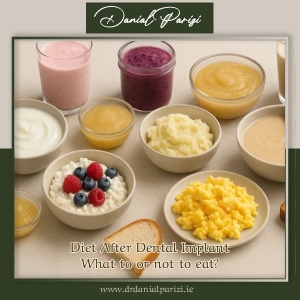
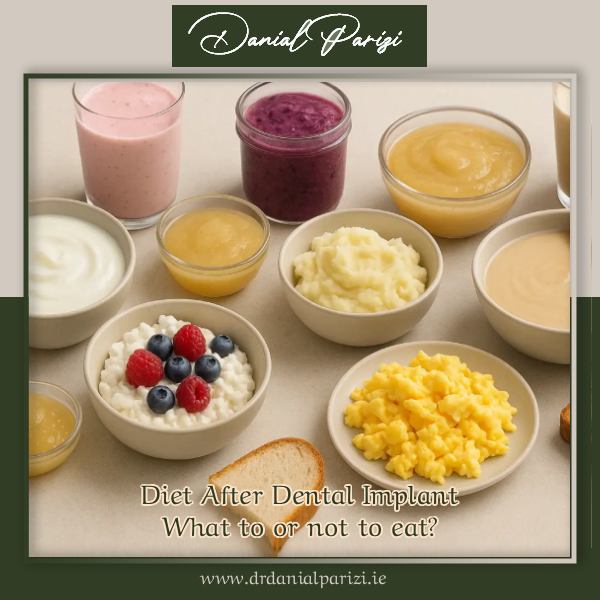
The first day is the most critical period for healing. During the first 24 hours, the surgical site is particularly sensitive, and the blood clot forming around the implant should remain undisturbed. Patients are generally advised to consume:
- Cool soups
- Yogurt
- Smoothies (without a straw)
- Mashed potatoes
- Applesauce
- Pudding
- Scrambled eggs
- Protein shakes
It is equally important to stay hydrated by drinking plenty of water. During this period, avoid:
- Hot foods
- Spicy meals
- Crunchy snacks
- Hard foods
- Alcohol
- Carbonated beverages
- Smoking
Allowing the surgical site to heal without unnecessary irritation helps create favorable conditions for osseointegration.
How Long After Dental Implants Can I Eat Normally?
One of the most common patient questions is, how long after dental implants can I eat normally? The answer depends on several factors, including:
- Number of implants placed
- Complexity of surgery
- Bone quality
- Individual healing response
- Whether bone grafting was performed
For most patients, the recovery timeline follows a gradual progression.
- First 24 Hours: Consume only soft and cool foods.
- Days 2 to 7: Continue eating soft foods that require minimal chewing.
- Weeks 2 to 4: Gradually introduce foods with a slightly firmer texture as comfort improves.
- After Complete Healing: Once your dentist confirms adequate healing and implant stability, you can typically resume your normal diet.
Although many patients feel comfortable eating relatively normally within one to two weeks, complete osseointegration often requires several months. Your dentist will advise when the implant is ready to withstand full chewing forces.
What to Eat After Dental Implant
Choosing nutritious foods supports faster healing while minimizing stress on the implant. Protein-rich foods are especially valuable because protein plays a central role in tissue repair.
Dairy Products
- Yogurt
- Cottage cheese
- Soft cheese
Protein Sources
- Scrambled eggs
- Soft fish
- Shredded chicken
- Tofu
- Protein shakes
Fruits
- Bananas
- Applesauce
- Avocado
- Soft peaches
Vegetables
- Mashed sweet potatoes
- Cooked carrots
- Pumpkin puree
- Well-cooked squash
Grains
- Oatmeal
- Soft rice
- Cream of wheat
- Well-cooked pasta
Healthy Fats
- Avocado
- Olive oil
- Nut butters (if easy to swallow)
A balanced diet provides essential nutrients such as:
- Protein
- Vitamin C
- Zinc
- Calcium
- Vitamin D
These nutrients support wound healing and bone regeneration during implant recovery.
Foods to Avoid After Dental Implant Surgery
Just as important as knowing what to eat is understanding what should be avoided. Certain foods increase the risk of discomfort, delayed healing, or implant complications. Avoid:
- Hard candies
- Nuts
- Popcorn
- Chips
- Ice
- Tough meats
- Crusty bread
- Sticky candy
- Chewing gum
- Seeds
These foods may place excessive pressure on the surgical site or become lodged around the implant. Patients should also avoid chewing directly on the implant side until advised by their dentist.
Alcohol After Dental Implant
A frequent concern among patients is whether they can drink alcohol after implant surgery. In general, alcohol should be avoided during the initial healing period. Alcohol may interfere with recovery by:
- Delaying wound healing
- Increasing inflammation
- Causing dehydration
- Interacting with prescribed medications
- Increasing bleeding risk
If antibiotics or pain medications have been prescribed, alcohol should be avoided until the medication course has been completed. Most dentists recommend avoiding alcohol for at least 48 to 72 hours, although longer restrictions may be appropriate depending on the complexity of treatment and individual healing. Following professional recommendations gives the implant the best opportunity for successful integration.
Coffee After Dental Implant
Many patients wonder whether they can continue drinking coffee after surgery. Coffee itself is not necessarily harmful to dental implants, but timing matters. Immediately after surgery, very hot beverages may:
- Increase bleeding
- Irritate healing tissues
- Delay clot stabilization
Additionally, caffeine may contribute to mild dehydration if fluid intake is inadequate. Most dentists recommend avoiding hot coffee during the first 24 to 48 hours after implant surgery. If coffee is consumed afterward, it should ideally be:
- Lukewarm rather than very hot
- Consumed in moderation
- Followed by adequate water intake
Patients should also avoid adding excessive sugar, which may contribute to bacterial growth.
Can I Eat Bread After Dental Implant?
Another common question is, can I eat bread after dental implant surgery? The answer depends on both the type of bread and the stage of healing.
Soft bread may be introduced gradually once chewing becomes comfortable. However, patients should initially avoid:
- Crusty bread
- Toast
- Bagels
- Hard rolls
- French bread with a firm crust
Fresh, soft bread that requires minimal chewing is generally more suitable during recovery. Even then, chewing should be done carefully and preferably on the side opposite the implant until healing progresses. As healing continues, most patients can gradually resume eating all types of bread without difficulty.
Tips for Faster Healing Through Nutrition
Good nutrition supports not only comfort but also successful osseointegration. Helpful recommendations include:
- Stay well hydrated.
- Eat small, frequent meals.
- Consume adequate protein.
- Include fruits and vegetables rich in vitamins.
- Avoid smoking.
- Limit sugary foods.
- Follow medication instructions carefully.
- Attend scheduled follow-up appointments.
Healing is influenced by the body’s overall health, making balanced nutrition an essential part of implant care.
Common Dietary Mistakes After Dental Implant Surgery
Several avoidable mistakes may interfere with recovery. Common errors include:
- Eating hard foods too early
- Drinking hot beverages immediately after surgery
- Skipping meals
- Consuming excessive alcohol
- Using a straw during the first few days
- Chewing directly on the implant site
- Ignoring postoperative instructions
Fortunately, these mistakes are easy to avoid with proper education and careful planning.
Diet After Dental Implant FAQ
How long after dental implants can I eat normally?
Most patients gradually return to a normal diet within a few weeks, although complete healing and osseointegration require several months. Your dentist will advise when it is safe to resume unrestricted chewing.
What are the best foods to eat after dental implant surgery?
Soft, nutritious foods such as yogurt, mashed potatoes, scrambled eggs, oatmeal, smoothies, cooked vegetables, and soft fish are excellent choices during recovery.
Can I drink coffee after dental implant surgery?
It is generally recommended to avoid hot coffee during the first 24 to 48 hours. Once initial healing has begun, lukewarm coffee may usually be consumed in moderation.
Can I drink alcohol after getting a dental implant?
Alcohol should be avoided during the early healing period because it may delay recovery and interact with prescribed medications.
Can I eat bread after dental implant surgery?
Soft bread may be introduced gradually as healing progresses. Hard, crusty bread should be avoided until your dentist confirms adequate healing.
Can I eat rice after dental implant surgery?
Yes. Well-cooked, soft rice is usually suitable during the recovery period because it requires minimal chewing.
How long should I eat soft foods after dental implant surgery?
Most patients benefit from eating soft foods for approximately one week, although recommendations vary depending on the complexity of treatment.
Can I eat ice cream after dental implant surgery?
Plain ice cream may be acceptable in moderation because it is soft and cool. However, avoid varieties containing hard nuts, caramel, or crunchy toppings.
Why can’t I use a straw after dental implant surgery?
Using a straw creates suction inside the mouth, which may disturb the healing blood clot and interfere with the early stages of recovery.
Does diet affect dental implant success?
Yes. A balanced, nutrient-rich diet supports wound healing, reduces inflammation, and promotes successful osseointegration, making nutrition an important factor in long-term implant success.